Download Oracle Cloud Infrastructure 2020 Architect Professional.1Z0-997-20.CertDumps.2021-01-17.50q.tqb
| Vendor: | Oracle |
| Exam Code: | 1Z0-997-20 |
| Exam Name: | Oracle Cloud Infrastructure 2020 Architect Professional |
| Date: | Jan 17, 2021 |
| File Size: | 1 MB |
How to open TQB files?
Files with TQB (Taurus Question Bank) extension can be opened by Taurus Exam Studio.
Purchase
Coupon: TAURUSSIM_20OFF
Discount: 20%
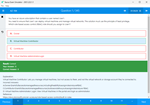
Demo Questions
Question 1
You are helping a customer troubleshoot a problem. The customer has several Oracle Linux servers in a private subnet within a Virtual Cloud Network (VCN). The servers are configured to periodically communicate to the Internet to get security patches for applications installed on them.
The servers are unable to reach the internet. An Internet Gateway has been deployed in the public subnet in the VCN and the appropriate routes are configured in the Route Table associated with the public subnet.
Based on cost considerations, which option will fix this issue? (Choose the best answer)
- Create a NAT gateway in the VCN and configure the NAT gateway as the route target for the private subnet.
- Create another Internet Gateway and configure it as route target for the private subnet.
- Create a Public Load Balancer in front of the servers and add the servers to the Backend Set of the Public Load Balancer.
- Implement a NAT instance in the public subnet of the VCN and configure the NAT instance as the route target for the private subnet.
Correct answer: D
Question 2
A new international hacktivist group, based in London, launched wide scale cyber attacks including SQL Injection and Cross-Site Scripting (XSS) across multiple websites which are hosted in Oracle Cloud Infrastructure (OCI). As an IT consultant, you must configure a Web Application Firewall (WAF) to protect these websites against the attacks.
How should you configure your WAF to protect the website against those attacks? (Choose the best answer.)
- Enable a Protection Rule to block the attacks based on HTTP Headers that contain XSS and SQL strings.
- Enable an Access Rule to block the IP Address range from London.
- Enable a Protection Rule to block requests XSS Filters Categories and SQL Filters Categories.
- Enable a Protection Rule to block requests that came from London.
- Enable an Access Rule that contains XSS Filters Categories and SQL Filters Categories.
Correct answer: C
Question 3
You work for a public health care company based in the United States. Their existing patient records system runs in an on-premise data center and the customer is sending tape backups offsite as part of their disaster recovery planning.
You developed an alternative archival solution using Oracle Cloud Infrastructure (OCI) that will save the company a significant amount of money on a yearly basis.
The solution involves storing data in an OCI Object Storage bucket. After reviewing your solution with the customer Global Risk and Compliance (GRC) team, they highlighted four security requirements:
- All data less than 1 year old must be accessible within 2 hours
- All data must be retained for at least 10 years and be accessible within 48 hours
- All data must be encrypted at rest
- No data may be transmitted across the public internet
Which two options meet the requirements outlined by the customer GRC team? (Choose two.)
- Provision a FastConnect link to the closest OCI region and configure a private peering virtual circuit.
- Provision a FastConnect link to the closest OCI region and configure a public peering virtual circuit.
- Create an OCI Object Storage Standard tier bucket. Configure a lifecycle policy to archive any object that is older than 365 days.
- Create an OCI Object Storage Standard tier bucket. Configure a lifecycle policy to delete any object that is older than 7 years.
- Create a VPN connection between your on-premises data center and OCI. Create a Virtual Cloud Network (VCN) along with an OCI Service Gateway for OCI Object Storage.
Correct answer: BC
Question 4
Multiple departments in your company use a shared Oracle Cloud Infrastructure (OCI) tenancy to implement their projects. You are in charge of managing the cost of OCI resources in the tenancy and need to obtain better insights into department's usage.
Which three options can you implement together to accomplish this? (Choose three.)
- Create a budget that matches your commitment amount and an alert at 100 percent of the forecast.
- Set up a tag default that automatically applies tags to all specified resources created in a compartment. Then use these tags for cost analysis.
- Set up different compartments for each department. Then track and analyze cost per compartment.
- Use the billing cost tracking report to analyze costs.
- Set up a consolidated budget-tracking tags to analyze costs in a granular manner.
Correct answer: ACE
Question 5
You are working for a Travel company and your travel portal application is a collection of microservices that run on Oracle Cloud Infrastructure Container Engine for Kubernetes. As per the recent security overview, you have noticed that Oracle has published a newer image of the Operating System used by the worker nodes. You want to make sure that your application doesn't face any downtime but at the same time the worker nodes gets upgraded to the latest version of the Operating System.
What should you do to get this upgrade done without application downtime? (Choose the best answer.)
- 1. Shutdown the worker nodes 2. Create a new node pool 3. Manually schedule the pods on the newly built node pool
- 1. Create a new node pool using the latest available Operating System image. 2. Run kubectl cordon <node name> against all the worker nodes in the old pool to stop any new application pods to get scheduled 3. Run kubectl drain <node name> """"delete""local""data """"force """"ignore""daemonsets to evict any Pods that are running 4. Delete the old node pool
- 1. Create a new node pool using the latest available Operating System image 2. Run kubectl taint nodes """"all node""role.kubernetes.io/master"" 3. Delete the old node pool
- 1. Run kubectl cordon <node name> against all the worker nodes in the old pool to stop any new application pods to get scheduled 2. Run kubectl drain <node name> """"delete""local""data """"force """"ignore""daemonsets to evict any Pods that are running 3. Download the patches for the new Operating System image 4. Patch the worker nodes to the latest Operating System image
Correct answer: D
HOW TO OPEN VCE FILES
Use VCE Exam Simulator to open VCE files
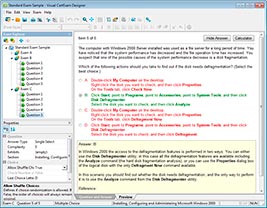
HOW TO OPEN VCEX FILES
Use ProfExam Simulator to open VCEX files
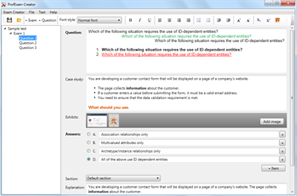
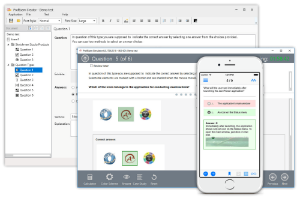
ProfExam at a 20% markdown
You have the opportunity to purchase ProfExam at a 20% reduced price
Get Now!